1. Percentage
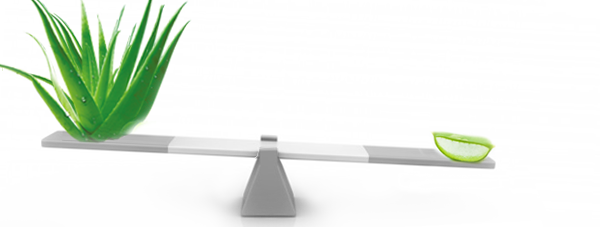
End users often believe that the percentage on a product description says something about the quality of the goods. That's not the case. The percentage of aloe vera products indicates how high the aloe content is in the respective product. However, this information cannot be used to determine the type of processing or which Aloe Vera plant was processed. The quantity of "valuable ingredients" is also completely missing.
2. Freshness vs. powder
For many products available on the market, the manufacturers use aloe powder or concentrate. The powder is of course made from aloe vera. During the production of aloe powder and during drying, however, it loses a large part of its positive properties (> 70%). Unfortunately, there is still no obligation to provide information about whether really fresh aloe vera gel or only concentrate is used. You can compare this to fresh milk and powdered dry milk.
Designations such as: "Freshly used aloe vera" are also popular. However, this does not automatically mean that you contain fresh aloe vera. The aloe vera concentrate "FRESH" is often mixed and then given the label "Fresh Aloe Vera" by various providers.
Many of the names of the INCI ingredients are very confusing for end users. e.g. when you hear the name aloe vera gel, you think of fresh aloe vera gel. In reality this is the name of an already mixed ingredient = aloe vera powder + water.
In our products, we specifically refer to the following ingredient: Aloe Barbadensis (de hoja fresca), from the fresh leaf.
3. Age of the plants
The age of the plants plays a very important role in processing with regard to the quality and quantity of the ingredients. The plant is in rapid growth for the first 2 years and thus claims almost all of the ingredients for itself.
From the age of 3 to 4 years, these ingredients are then stored in your leaf gel. From this point on, the concentration of e.g. ACEMANNAN significantly higher than in the first 2 years of life. As a rule, you can assume that the older the plant, the better the quality.
Unfortunately, no information is given on this. Before you decide on a product, you should ask your dealer about it.
4. Types and regions
The aloe plants grow in all regions of the world. There are over 300 different types. The plant with the demonstrably highest proportion of "valuable ingredients" is Aloe Vera Barbadensis Miller. Often this species is also called "The real Aloe Vera".
The Aloe Vera Barbadensis Miller is an endemic species. This means that the plant occurs exclusively on Fuerteventura and has its origin there.
You can grow the Barabadensis Miller in Germany and in many other countries, but you will never get the quality you want. This depends on several factors.
The climatic conditions, such as humidity, precipitation and sun, but also the nature of the soil, are the most important factors here. In addition, you will always find environmental influences from industry and their pollutants from the air in your plant.
Very often Barabandensis Miller products are offered on the market that do not come from Fuerteventura at all. Here it is advisable to pay particular attention to the origin of the products. The best way to verify this is by calling or emailing the manufacturer.
5. Amount of water
Like all plants, the aloe vera plant also needs water to live and grow. The amount of water also has a very strong influence on their appearance. With the addition of a lot of water you can grow the aloe plant quickly. So you get a plump and green aloe plant that is very nice to look at.
However, the proportion of water in the aloe leaf is correspondingly high and this also strongly dilutes the positive properties. (Nonetheless, aloe vera plants cultivated in this way may still be labeled 100% aloe vera. See point 1).
However, our aloe plants are grown very slowly and with little water. This process is called "cresco secco".
The leaves of these plants have a maximum length of approx. 30 cm and a weight of only approx. 400 gr
End users often believe that the percentage on a product description says something about the quality of the goods. That's not the case. The percentage of aloe vera products indicates how high the aloe content is in the respective product. However, this information cannot be used to determine the type of processing or which Aloe Vera plant was processed. The quantity of "valuable ingredients" is also completely missing.
2. Freshness vs. powder
For many products available on the market, the manufacturers use aloe powder or concentrate. The powder is of course made from aloe vera. During the production of aloe powder and during drying, however, it loses a large part of its positive properties (> 70%). Unfortunately, there is still no obligation to provide information about whether really fresh aloe vera gel or only concentrate is used. You can compare this to fresh milk and powdered dry milk.
Designations such as: "Freshly used aloe vera" are also popular. However, this does not automatically mean that you contain fresh aloe vera. The aloe vera concentrate "FRESH" is often mixed and then given the label "Fresh Aloe Vera" by various providers.
Many of the names of the INCI ingredients are very confusing for end users. e.g. when you hear the name aloe vera gel, you think of fresh aloe vera gel. In reality this is the name of an already mixed ingredient = aloe vera powder + water.
In our products, we specifically refer to the following ingredient: Aloe Barbadensis (de hoja fresca), from the fresh leaf.
3. Age of the plants
The age of the plants plays a very important role in processing with regard to the quality and quantity of the ingredients. The plant is in rapid growth for the first 2 years and thus claims almost all of the ingredients for itself.
From the age of 3 to 4 years, these ingredients are then stored in your leaf gel. From this point on, the concentration of e.g. ACEMANNAN significantly higher than in the first 2 years of life. As a rule, you can assume that the older the plant, the better the quality.
Unfortunately, no information is given on this. Before you decide on a product, you should ask your dealer about it.
4. Types and regions
The aloe plants grow in all regions of the world. There are over 300 different types. The plant with the demonstrably highest proportion of "valuable ingredients" is Aloe Vera Barbadensis Miller. Often this species is also called "The real Aloe Vera".
The Aloe Vera Barbadensis Miller is an endemic species. This means that the plant occurs exclusively on Fuerteventura and has its origin there.
You can grow the Barabadensis Miller in Germany and in many other countries, but you will never get the quality you want. This depends on several factors.
The climatic conditions, such as humidity, precipitation and sun, but also the nature of the soil, are the most important factors here. In addition, you will always find environmental influences from industry and their pollutants from the air in your plant.
Very often Barabandensis Miller products are offered on the market that do not come from Fuerteventura at all. Here it is advisable to pay particular attention to the origin of the products. The best way to verify this is by calling or emailing the manufacturer.
5. Amount of water
Like all plants, the aloe vera plant also needs water to live and grow. The amount of water also has a very strong influence on their appearance. With the addition of a lot of water you can grow the aloe plant quickly. So you get a plump and green aloe plant that is very nice to look at.
However, the proportion of water in the aloe leaf is correspondingly high and this also strongly dilutes the positive properties. (Nonetheless, aloe vera plants cultivated in this way may still be labeled 100% aloe vera. See point 1).
However, our aloe plants are grown very slowly and with little water. This process is called "cresco secco".
The leaves of these plants have a maximum length of approx. 30 cm and a weight of only approx. 400 gr